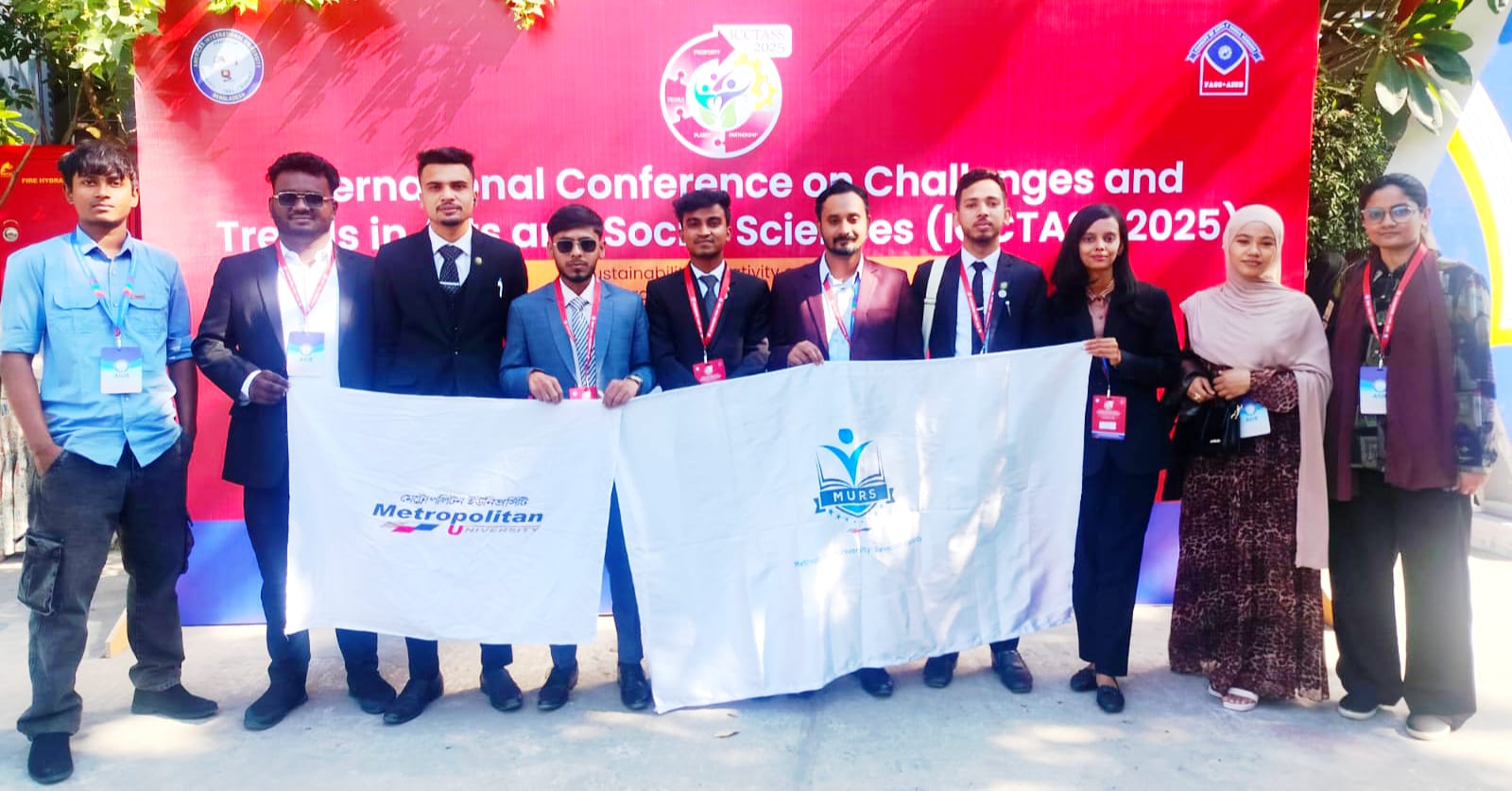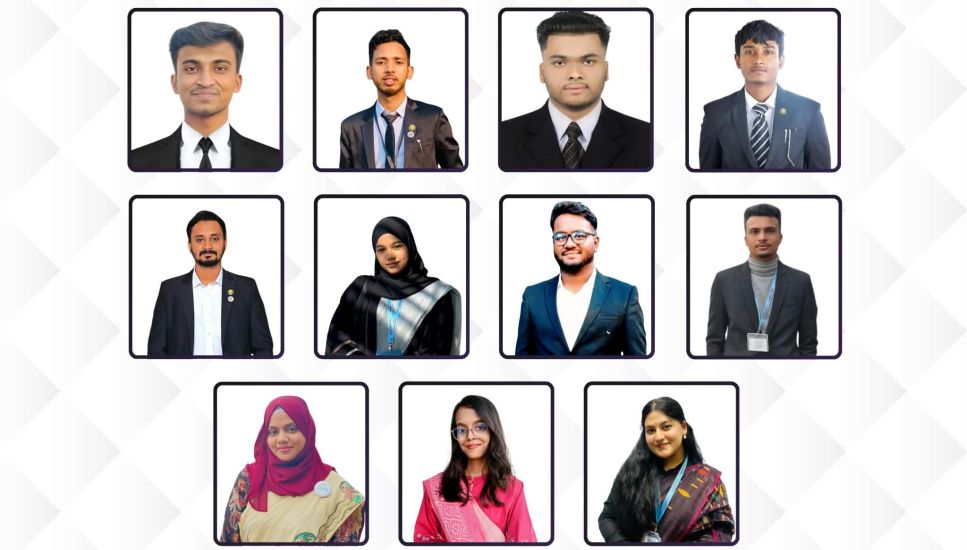
Continuing its streak of academic and research excellence, Metropolitan University (MU), a leading private university, has added another feather to its cap at the national level. The Metropolitan University Research Society (MURS) recently announced that a total of 11 research abstracts authored by MU students and researchers have been accepted for presentation at the prestigious Bangladesh Future Forum (BFF)-2026.
This esteemed research forum is scheduled to take place on January 24–25, 2026, at North South University in Dhaka. The event will gather researchers, academic experts, policymakers, and scholars from various universities across the country. The forum aims to facilitate effective knowledge exchange through interdisciplinary research focusing on Bangladesh's future development, policy reforms, social justice, technological advancement, and economic transformation.
The accepted papers cover highly relevant and contemporary topics, including law, governance, climate change, artificial intelligence (AI), education, healthcare, labor rights, mental health, and the future of work. These studies clearly reflect the research-oriented mindset, academic brilliance, and global perspective of MU students.
Accepted Research Teams & Topics:
Team 01: Jayanta Sen, Md. Tarek Mia & Shahriar Alam Mehdi Tarafder — "Environmental Degradation and the Right to Life: Reinterpreting Article 32 of the Constitution of Bangladesh in Climate Change"
Team 02: Shahriar Alam Mehdi Tarafder, Jayanta Sen, Sushmita Chowdhury Rimi, Md. Biplob Ahmed & Nusrat Jannat Tarana — "Justice Delayed or Democracy Denied? Governance Challenges in Post-Conflict Societies"
Team 03: Shahriar Alam Mehdi Tarafder, Shahidur Rahman Shakib & Aisha Anjum Anisha — "Roads to Prosperity or Paths to Dependence? Bangladesh’s Belt and Road Strategy towards 2050"
Team 04: Urmi Akter — "Assessing a Decade of Environmental Degradation in Shahporan, Sylhet: Industrialization, Urban Expansion, and Ecological Decline"
Team 05: Shahidur Rahman Shakib — "AI and the Future of Work: Transforming Teaching–Learning Models for Employability"
Team 06: Shahidur Rahman Shakib & Shahriar Alam Mehdi Tarafder — "Graduate Unemployment Paradox: A Study of Educated Youth and Labor Market Mismatch"
Team 07: Shah Fazle Elahi — "Wrong Diagnosis or Misdiagnosis: Legal Implications in the Context of Bangladesh"
Team 08: Raihan Ahmed Talukdar & Nusrat Jahan Doha — "The Mental Health Crisis in Bangladesh: A Psychoanalytic Analysis of Social Well-being and Criminality" & "Breaking the Silence: Workers’ Rights and Social Justice in Bangladesh’s Tea Sector"
Team 09: Md. Biplob Ahmed — "Codifying Memory, Institutionalizing Justice: A Legal Framework for the Truth and Accountability Commission in Post-2024 Bangladesh" & "Navigating the Double Transition: Structural Transformation, Human Capital, and the Future of Work in Bangladesh (2026–2041)"
In a statement, MURS expressed, "This achievement is not just about research; it is a tangible reflection of the dreams, perseverance, and relentless hard work of MU students. We believe this success will inspire many more students to pursue research in the future."
University faculty members remarked that the selection of such high-quality and contemporary topics demonstrates the global vision and research capacity of the students. They hoped that the name of Metropolitan University would continue to shine in future national and international research forums.
This milestone has been achieved under the visionary leadership and continuous support of the University’s Founder and Chairman Emeritus, Dr. Toufique Rahman Chowdhury, and the Chairman of the Board of Trustees, Tanveer Rahman Chowdhury. Furthermore, the academic guidance and dedication of MURS President and Associate Professor Md. Saidur Rahman Palash, along with respected faculty members and research supervisors, played a pivotal role in nurturing this research-driven culture.
Latest News
MU Students' Research Papers Accepted for Prestigi...
18 Mar, 2026
5-Day 'Research 360°' Workshop Successfully Conclu...
10 Feb, 2026
Metropolitan University Opens New Horizons in Rese...
29 Nov, 2025
MURS Member Recruitment Interviews Successfully Co...
25 Oct, 2025